Desert1
Carla Valdespino Vargas
1. It’s not me
A blow on the ground shakes our guts. Blood gushes out and colours the sand in an agonising red. No, it’s not me who dies in the sunshine, in the shadow of a vulture. No, it’s not me, but it could be me.
A cry that resounds in the desert. I realise it’s not me, and so I shake the dust from under my feet, but that piece of flesh, it’s your body, my body, our body that is bleeding to death with a broken heart, a heart that the vultures will slowly eat. Body? Did I say body? No, I’m not a body. I am a piece of flesh from which blood gushes, blood that feeds the desert, and the vultures and the press and the statistics and the morbidity and the prosecution because I am a fool, and only to a very foolish person do these things happen. And what is there in this body-object, body questioned, impaled, burnt, flayed, pierced, stoned, raped, mutilated…discarded? My belly opens up like a desert flower of cocaine. A razor traces-cuts-opens. Did I say body? Yes, I am an empty body thrown on the frontier…in freedom.
Silence
Did you manage to hear your scream hitting the earth? The cry that echoes in the desert? It is the scream that pierces my body with every word written by Iris García. But how did I get here? How did you get here, how did we get here? Sometimes love leads us to cross borders with no turning back, and then our bodies appear on the desert sand, on the asphalt, in a wasteland, on the edge of the drain. Mutilated bodies that once dreamed.
How did we get to this point, at what point did we tolerate women’s bodies being transmuted into mere objects? Finding a report of a murdered woman in the newspapers has gradually become normalised, which leads to the invisibility of violence. The invisibility of the invisible. The system has objectified us and objects can be thrown down the drain, put in bags, thrown over a fence more than two metres high into a vacant lot, and then burnt, watching the fire calmly. Throw them out of a pick-up truck to bleed to death in the desert.
The murdered women only have their wounded bodies to defend themselves.
In ‘Sueño de arena’ we meet a voice that leads us, from her childhood, through the abuse she suffers at the hands of her parents; her falling in love with her man; her running away; the men squeezing her body; the hospital where she vomits yellow, until she reaches the desert. She makes us watchfeel the blood gushing from a belly full of cocaine. A voice that laments, that screams, that claims, that hurts. A voice that is judged more and more severely: her, dumb, stupid, imbecile, unhappy, poor little idiot, silly, foolish, pendeja, miserable, until she ends up as a piece of meat lying on the desert, and that is when we realise that her pain is ours, that her desperation is ours, that we are her. Name? No, there is a name, but it’s not me, it can’t be me, because only to a fool such things happen.
This is not happening. She is not lying in the middle of the desert. No, it’s not blood gushing out. No vultures are flying around waiting for her to die. There is no fear. No, there is no fear. There is a point of light in front of her eyes. There is a sky. Clear. Blue. There is sleep, a lot of sleep (García: 82).
Yes, you heard right, I said voice and not narrator, because ‘Sueño de arena’ is a poem, and that poetic voice comes and goes, it tries to convince itself that this is not happening, that she did not allow her man to use her, to sell her and throw her into the desert, like a piece of useless meat. It is a voice that resonates throughout our bodies until we are standing in the desert trying to convince ourselves by repeating the mantra ‘It’s not me’. But reality hits us hard, we are the ones who emit that lament that resounds throughout the desert. Yes, yes it is blood that gushes out. Yes, vultures are flying around waiting for her to die. Yes, there is pain. Yes, there is fear and yes, it is me lying in the middle of the desert.
2. I’m dead and I sing to myself
Let us be she-wolves gathering bones in the desert.
Let these words serve to gather the bones of all the women who lie in the desert. Let us be she-wolves and fill our caves with all those bones to preserve them from danger and, on days like today, let us sing to give back their souls, their names, their faces to all the women who have disappeared, who have been tortured. May our words be the Tau to search for faces, names, and justice.
1 Poetic intervention on the short story ‘Sueño de arena’ by Iris García, Mexican author. In García, Iris. Eyes that do not see, heart deserted. CONACULTA: Mexico City. 2009. Printed edition.
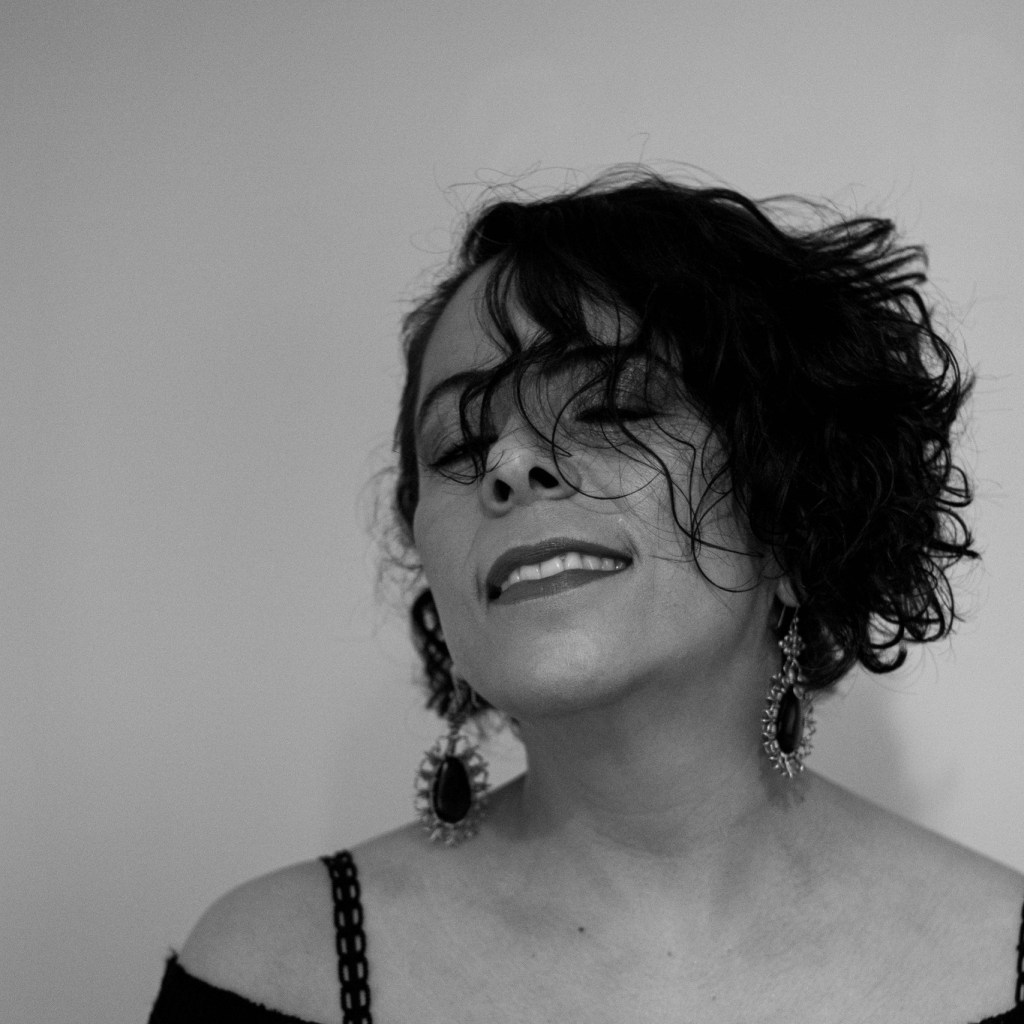
Carla Valdespino Vargas (Mexico) has a BA in Latin American Literature from the UAEMex and a Master’s degree in Anthropological Studies of Mexico from the UDLA-P. She is currently a teacher in Higher Secondary Education. She has published two books: De Noches, dioses y creaciones y Toluca-Metepec; Una Heterotopía. She is a contributor to ViceVersa Noticias and Diario Portal. She is also a member of the Comunnitas Latin America Network.
 Literaven.com